Since 2013, we have been regularly surveying guests of 4- and 5-star hotels in Germany and Austria as part of our Hotel Brand Monitoring – now with over 20,000 participants. The results show: Strong hotel brands measurably differentiate themselves from weaker brands in terms of perception, guest loyalty, and pricing power.
What does your hotel brand represent in the minds of your guests? How strong is your relationship with them really – and what economic value does this relationship hold? Since 2013, we have been answering these three questions within the framework of our Hotel Brand Monitoring: 43 projects, nearly 50,000 guests surveyed from 4- to 5-star hotels in Germany and Austria, over 9,000 hours of analyzed feedback.
What Does Your Hotel Brand Represent?
Strong hotel brands establish a clear, distinctive, and attractive brand image among their guests. Through spontaneous associations, we reveal how guests truly perceive a hotel brand – beyond what the brand itself communicates.
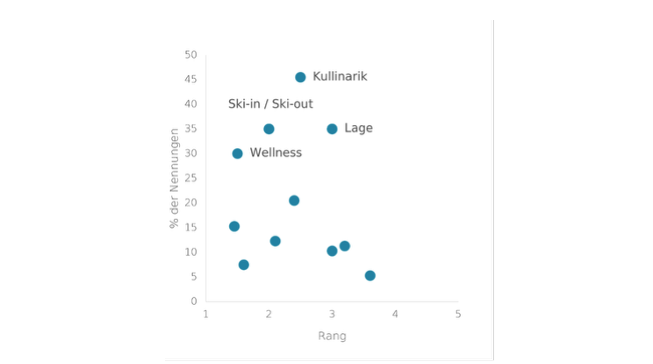
Our projects consistently reveal the same key themes in the hospitality industry: Culinary experience, location and surroundings, and relaxation dominate spontaneous associations. Hotels can strategically develop this current state through targeted activities, thereby strengthening their competitive position.
How Strong Is Your Relationship with Your Guests?
Strong hotel brands exceed their guests’ expectations, thereby creating many positive experiences. To make this measurable, we assess the importance of specific service promises and their actual fulfillment separately.
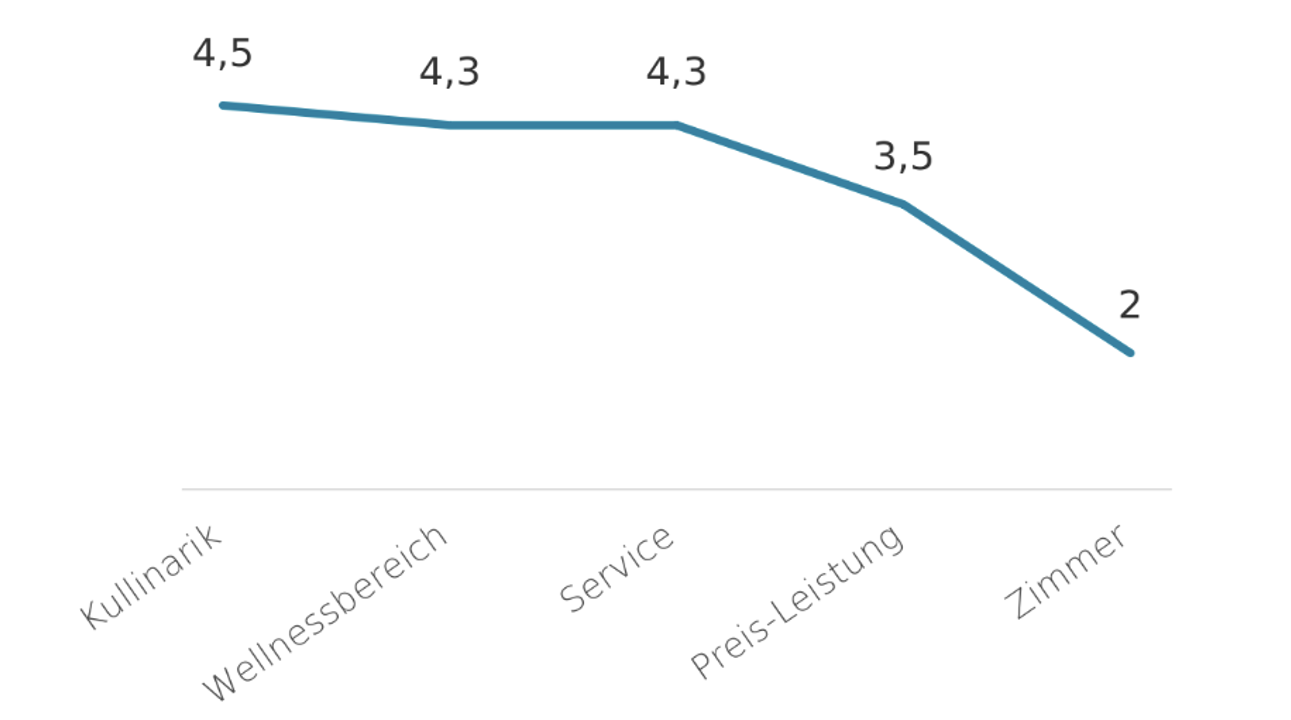
Our example shows a clear discrepancy: While culinary experience, wellness area, and service impress with values around 4.3 to 4.5, value for money (3.5) and especially the rooms (2.0) fall significantly short. Precisely such gaps between importance and fulfillment indicate where investments will have the greatest leverage on guest satisfaction.
Emotional Connection: More Than Just Satisfaction
Strong hotel brands have guests who return regularly and actively recommend the establishment. We measure this loyalty and show how promoters, passives, and detractors are distributed across different guest segments.
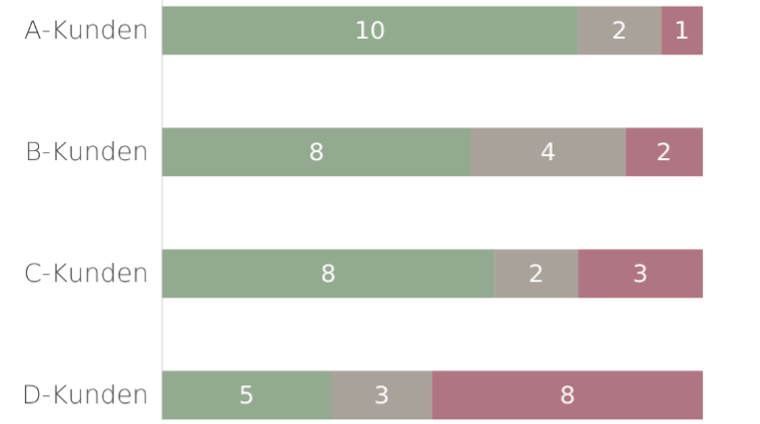
The differences between guest segments can be significant: While 77% of A-customers in our example are promoters, this proportion drops to around 31% for D-customers – with a simultaneously much higher proportion of detractors. Using the identified satisfaction drivers, communication and services can be specifically tailored to individual guest segments.
What Is the Value of Your Hotel Brand?
Strong hotel brands are able to command higher prices than their competitors. Using Conjoint Analysis, we determine the proportion of the price or booking volume that is actually attributable to the hotel brand itself – independent of category or pure price level.
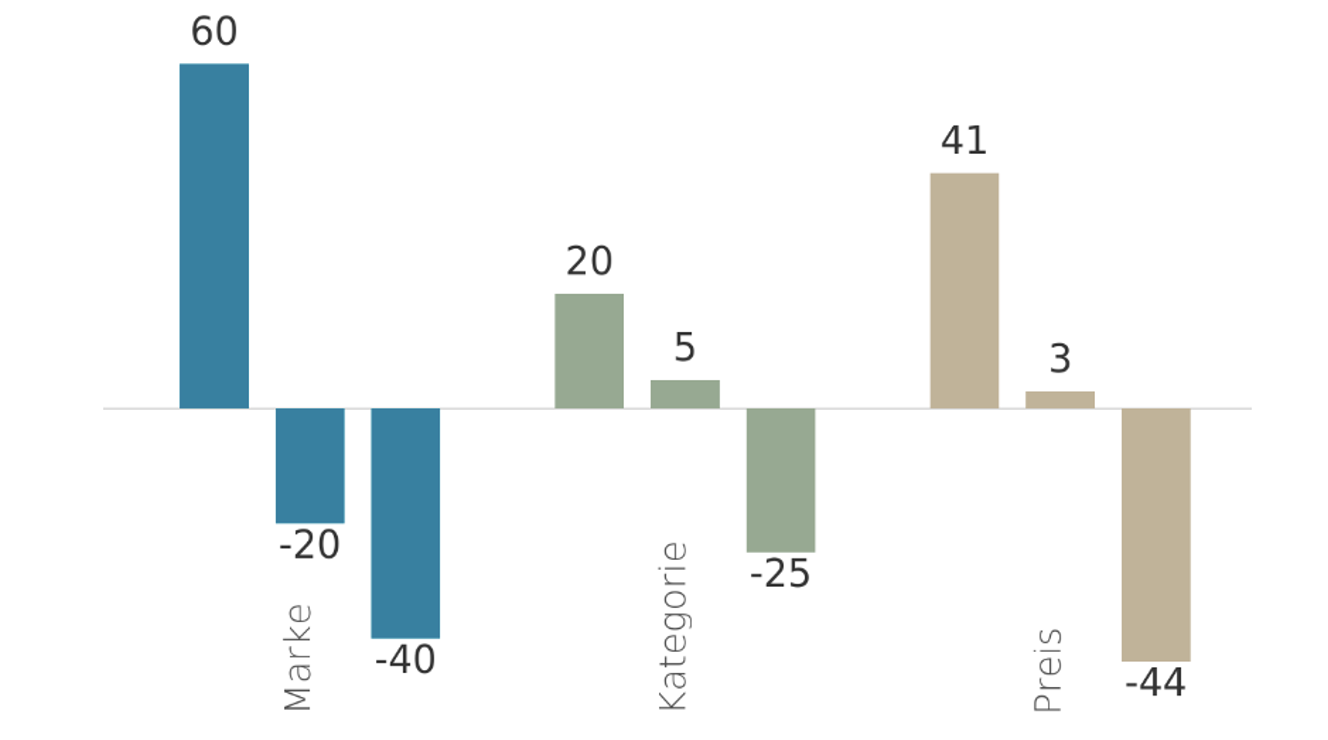
Benchmarking Against Your Industry
A single metric is only half the truth – only comparison makes it meaningful. For selected satisfaction indicators such as the Net Promoter Score® and key performance factors, we provide anonymized top values from our previous brand monitors. These reference values help to realistically classify and interpret one’s own performance – not in a vacuum, but in comparison to similar 4- and 5-star hotels in German-speaking countries.
What This Means for Your Business
Brand, relationship, and value are not abstract concepts in the hospitality industry, but concretely measurable quantities – and they are directly linked: Those who know what their brand stands for, where expectations are not met, and what pricing flexibility their own brand actually offers, can steer investments in product, service, and communication much more precisely.
How does your hotel brand compare within the industry?
With our Hotel Brand Monitoring, we show you what your brand represents to guests, where expectations are not met, and what pricing flexibility you truly have – in direct comparison to similar establishments.