Skip to content
Insights / Brand Management

Brand Management in Industrial Goods Markets

The Strategic Importance of Brand Management

Komplexe mechanische Metallbauteile und ein Zahnrad in einem geöffneten Fahrzeuggetriebe.

Brand and brand management have gained considerable importance in recent years, both in scientific research and in corporate practice.

The importance of brand tends to be emphasized more in the consumer goods industry and in services. However, when considering industrial goods markets, significantly less importance is attached to the topic of brand. In this case, brand management is very narrowly defined and reduced to corporate design (logo, etc.) and advertising/communication.

The marketing department and its scope of tasks in these companies are often structured accordingly “simply.” Responsibility is reduced to operational marketing implementation (e.g., advertising, internet communication, trade fair appearances, etc.). Strategically, the topic of “brand” is only anchored in rare cases; strategy development projects often completely exclude the topic. This reduction is usually justified by the assertion that rational decision-making processes prevail in industrial goods markets, and therefore emotional topics like brand have no relevance for the company’s success.

A study conducted in Germany across four central industrial goods markets (automotive supplier, chemical, electrical, and mechanical engineering industries) (Markus Richter: Brand Significance and Management in the Industrial Goods Sector, Gabler Verlag, 2007) strongly questions these assumptions. We have summarized some of the key findings here and derived what we consider to be the central consequences for strategy development processes.

Brand Management – Its Influence on Business Success

In this study, Markus Richter investigated which aspects of brand management have a particularly strong influence on economic success. The influence was examined at three different levels:

  • Influence of brand management on customer loyalty

  • Influence of loyalty on aspects of market success such as customer satisfaction, acquisition of new customers, success rate in new product launches, achievable price levels, etc.

  • Influence of market success on the company’s economic success in terms of the return on sales achieved over the last 3 years compared to relevant competitors

Within the framework of brand management, four central influencing factors emerge for loyalty, market success, and thus also the economic success of companies. These four areas should be given particular attention and strategically designed by industrial goods companies.

Brand Positioning: Clear Strategic Anchoring and Continuous Cultivation

Even in the industrial goods sector, a brand should not be reduced to visual aspects such as a logo or name. Crucial is a clear vision of how the brand should be perceived by customers and other exchange partners in the future. A clear positioning, focused on product and service aspects, strengthens brand loyalty and corporate success in the long term. It should be continuously cultivated and adapted without fundamentally changing its core pillars.

Designing Brand Architecture: Customer Comprehensibility is a Must

The brand and assortment architecture must be as simple, logical, and comprehensible as possible for customers, as this strengthens brand loyalty. Changes in the breadth and depth of the brand assortment should therefore be made with great caution. Market-learned structural patterns should be kept as constant as possible, as frequent changes confuse customers and weaken existing loyalty.

Designing the Operational Brand Presence: Central Brand Importance of Sales Representatives

Uniqueness and uniformity of appearance, as well as continuity in operational implementation, are central success factors. However, the strongest influence on brand loyalty and economic success comes from consistent behavior of all employees with customer contact that aligns with the brand positioning. The more consistently sales, in particular, is aligned with the strategic positioning, the clearer the brand image can develop in the market.

This gives internal brand management central importance: Sales should be involved in the development of the brand strategy, the strategy should be broadly communicated internally, and translated into sales-relevant control specifications.

Organizational Anchoring of Brand Responsibilities: No Success Without Clear Structures

Clear responsibilities for the brand are organizationally central. However, in industrial goods companies, brand management is often shifted from operational business units to a marketing department, which often primarily handles operational advertising tasks. As a result, brand management is often reduced to corporate design. Brand responsibility should therefore be placed high up in the hierarchy and as close as possible to areas with direct sales responsibility.

At the same time, internal brand management must not be limited to sales. Areas with customer contact such as application engineering, product development, or service should also be involved in strategic further development and continuously informed about the brand’s significance and importance. Only a broad internal understanding of the brand’s strategic relevance enables the development of a strong brand in the market.

OUR CONCLUSION

From the multitude of possible aspects of brand management, both at the strategic and operational levels, these central building blocks stand out according to the study results from Germany. If industrial companies succeed in anchoring these success factors within the company in the medium term, positive results can be achieved regarding customer loyalty and thus market success and the company’s economic success.


Services

Brand Development
View All Services
Lächelnder Mann mit Brille und Dreitagebart blickt freundlich direkt in die Kamera.
From Mag. Christoph Antretter 24.08.2022

Articles You Might Be Interested In

All Articles
13.10.2026

25 Years of IMARK – We Celebrated!

Dreidimensionaler Schriftzug Employer Branding als Würfel gestaltet mit kleinen roten Silhouetten.
05.09.2026

The Employer Brand in Daily Operations

Nahaufnahme eines Autoreifens auf einer sonnenbeschienenen Asphaltstraße bei Sonnenuntergang.
04.09.2026

SWARCO: From Corporate Brand to a Living Employer Brand

Modernes Explorer Hotel mit Holzfassade und grünen Akzenten vor einer bewaldeten Bergkulisse.
10.08.2026

Brand as a Management Tool – The Success Model of the Explorer Hotels

Farbenfroher Pixel-Art-Schriftzug BRAND OVER? vor einer klassischen Retro-Videospiel-Landschaft.
12.06.2026

Brand Over?

Ein Geschäftsmann zeigt auf ein Tablet mit Daten und Diagrammen am Tisch.
06.05.2026

IMARK Insight Viewer

Eine Hand hält ein Smartphone mit Diagrammen vor einem Laptop mit detaillierten Datenanalysen.
08.04.2026

The Answers Data Can Provide

Kleine Menschen arbeiten gemeinsam an großen 3D-Buchstaben, die das Wort BRAND bilden.
24.03.2026

Does Your Company Have a Brand, or Is It a Brand?

Rote Turnschuhe stehen auf Asphalt vor aufgemalten Pfeilen in verschiedene Richtungen und einem Fragezeichen.
23.01.2026

Future Under Uncertainty

Ein Yin-Yang-Symbol auf einer verrosteten und verwitterten hellen Metalloberfläche.
17.11.2025

Should Strategy and Action Be Separated?

Ein junger Wanderer blickt durch ein Fernglas in eine bergige Naturlandschaft.
05.09.2025

OKRs: Effectively Implementing Strategy in Daily Operations

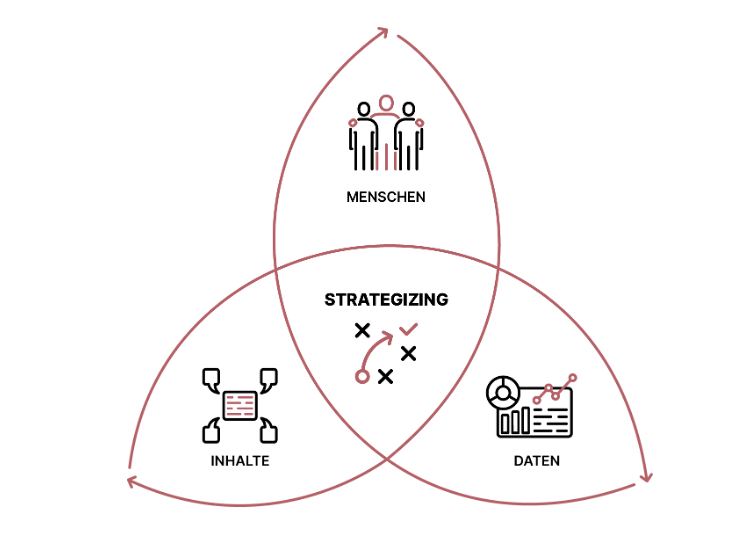
Venn-Diagramm zeigt die Schnittmenge von Menschen, Inhalten und Daten für Strategizing.
01.07.2025

Why we prefer to speak of strategizing and how it links content, people, and data

Ein weißer König liegt umgefallen neben einer schwarzen Dame auf dem Schachbrett.
09.06.2025

Configuring Services: The Search for the Holy Grail

Schwarze Buchstabentafel mit weißem Hashtag STAYTRUE vor einem pinken Hintergrund.
21.04.2025

Value Orientation in Companies

Glänzender Goldbarren mit der Prägung FINE GOLD umgeben von zahlreichen Goldmünzen.
28.02.2025

Brand Strength – Measuring for Measurement’s Sake?

Eine blühende violette Kapmargerite mit blauer Mitte vor schwarzem Hintergrund.
12.02.2025

Employer Branding Means One Thing Above All: Appreciation

Eine Person sitzt am Schreibtisch und arbeitet mit einem Dashboard auf dem Laptop.
31.01.2025

Strategically Planned Use of Scarce Resources

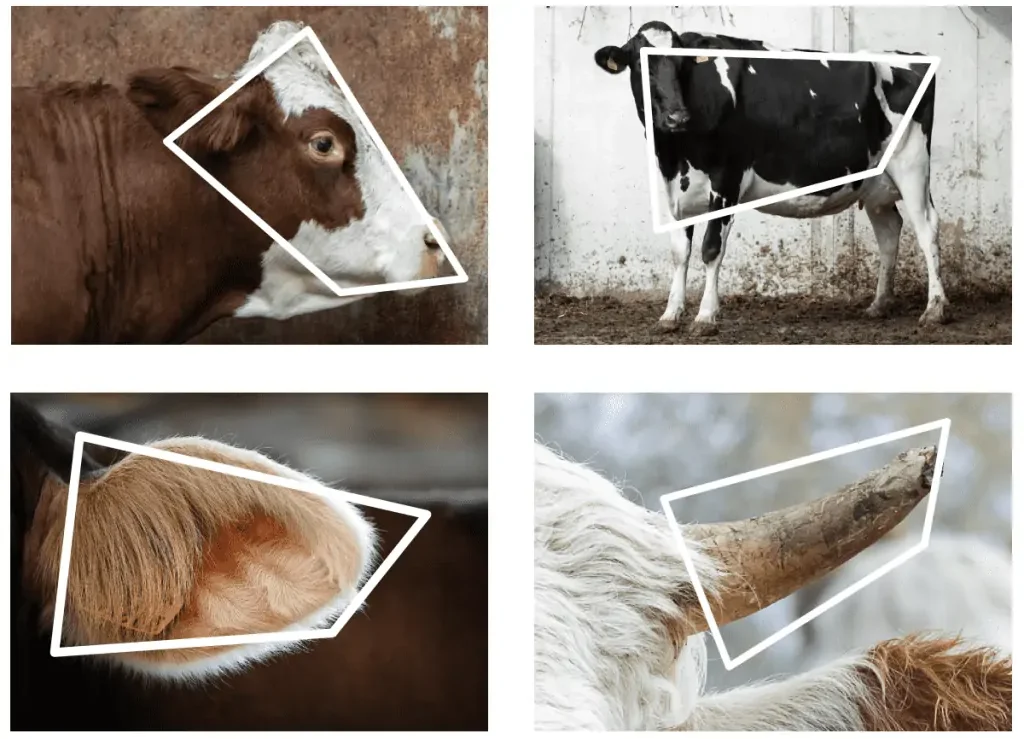
Vier Ansichten von Kühen mit geometrischen Markierungen auf Kopf, Körper, Ohr und Horn.
26.09.2024

From Cattle to Brand and Back Again

Eine grüne Birne und ein rotgelber Apfel liegen vor weißem Hintergrund.
17.07.2024

Of Apples and Oranges …

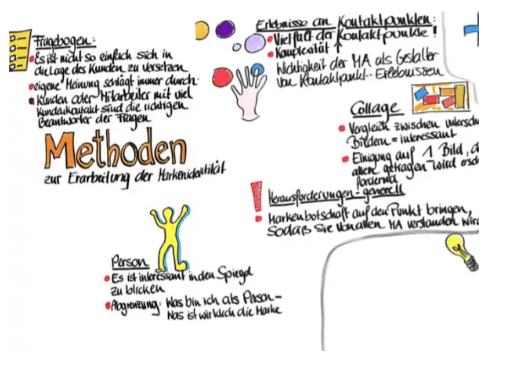
Handgezeichnete Sketchnote zu Methoden der Markenidentität mit Texten und kleinen bunten Illustrationen.
10.05.2024

Understanding Through Seeing

Mehrere Hände liegen aufeinander als Symbol für Teamarbeit und Zusammenhalt.
26.04.2024

Quality in Quantitative Market Research

Eine Hand kontrolliert die Qualität eines farbigen CMYK-Druckbogens mit einem Fadenzähler.
24.04.2024

Quality in Qualitative Market Research

Zwei Männer in Anzügen stehen vor einem Bildschirm mit dem Wedl Food Report 2024.
29.02.2024

How Austria Eats – Wedl Food Report 2024

Ein Mosaik aus zahlreichen kleinen Bildschirmen zeigt die Gesichter diverser Menschen.
22.12.2023

Representativeness = Quality?

Instrumententafel eines Flugzeugcockpits mit vier zentralen Schubhebeln und analogen Instrumenten.
07.12.2023

Marketing Dashboards: Dos and Don’ts

Modernes Explorer Hotel aus Holz vor verschneiter Bergkulisse unter blauem Himmel.
04.12.2023

Employer Branding: Case Study Explorer Hotels

Zufriedenheitsskala mit drei Smileys und einem Zeiger, der auf das glückliche Gesicht zeigt.
18.10.2023

NPS® Radar: What the Net Promoter Score Truly Reveals About Your Customers

Eine leuchtende Glühbirne schwingt wie ein Pendel über dem Schriftzug Conjoint Analyse.
28.09.2023

Conjoint Analysis: What Truly Matters to Customers – and What They Are Willing to Pay For

Freiluftbett auf einer Holzterrasse mit Panoramablick auf einen See und sonnige Berge.
14.09.2023

Hospitality: Over 12 Years of Fact-Based Strategy Development

Wissenschaftlicher Artikel aus dem Journal of Business Research zum Thema Markenstärke.
25.07.2023

One pie, many recipes: alternative paths to high brand strength

Vier goldene Sterne auf einer dunklen Hotel-Klassifizierungsplakette aus Metall.
17.05.2023

Hotel Brand Monitoring: What Sets Strong Hotel Brands Apart

Bunt dekoriertes Kunstobjekt mit Zimtstange, Kussmund, goldenen Kugeln und Edelsteinen auf weißem Hintergrund.
20.03.2023

Multi-Sensory Sculpting®

Eine Hand zeichnet eine Glühbirne aus bunten Marketing-Begriffen auf weißem Papier.
08.03.2023

Market Intelligence in Austrian Companies

Verschiedene Eissorten am Stiel und in Waffeln liegen nebeneinander auf blauen Holzbrettern.
09.01.2023

What Does Your Brand Truly Stand For? Insights into the World of Brand Associations

Eine Hand hält eine blaue Debitkarte für eine kontaktlose Bezahlung.
24.11.2022

Price Premium: How much more is your brand worth to your customers?

Zwei Männerhände greifen beim Armdrücken vor einer Holzwand fest ineinander.
12.10.2022

Strong Brand

Viele Menschen bilden aus der Vogelperspektive die Form von Inseln auf weißem Hintergrund.
06.07.2022

Segmentation in Practice: What 50 Decision-Makers Really Say

Zwei bunte Handabdrücke in Rot und Violett auf weißem Hintergrund.
06.04.2022

Investment in Brand Touchpoints – What’s Worthwhile and What Isn’t?

Ein roter Dartpfeil steckt direkt im Bullseye einer Dartscheibe.
16.02.2022

Positioning Decision

) 10. angeordnet (10) 11. sind. (11) Total: 11 words. (Fits 5-15 requirement). Does


11.01.2022

Segmentation: Assessing Segment Attractiveness

Gemischte bunte Schokoladenlinsen werden mit Pfeilen nach ihren Farben Rot, Grün und Gelb sortiert.
24.11.2021

Introduction to Segmentation

Wissenschaftlicher Artikel über die Stabilität von Markenassoziationen von Oliver Koll und Maria Kreuzer.
28.10.2021

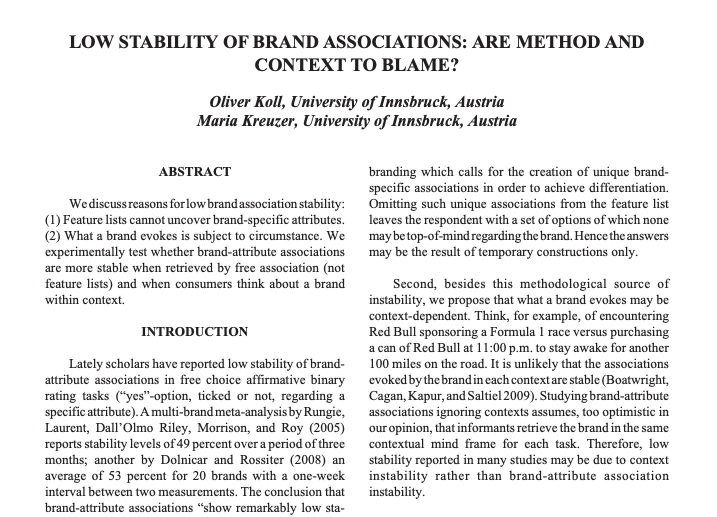
Stability of Brand Associations