Why we prefer to speak of strategizing
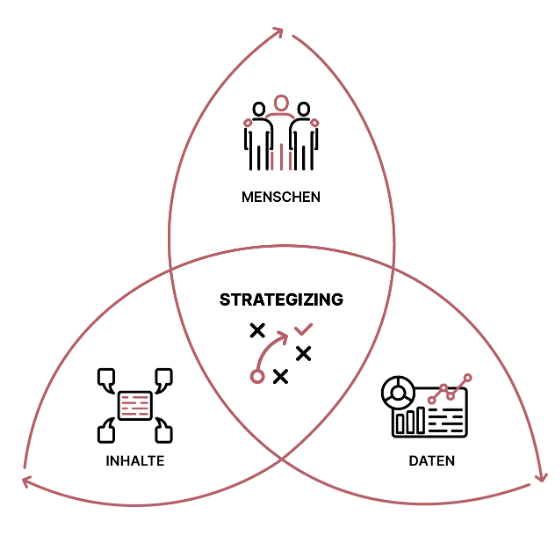
How content, people
& data are linked
Classic strategy papers—the result of a regularly recurring planning process with a thick appendix of analyses—still exist, but they have gone out of style.
One reason is that they fail during implementation. A study among managers highlights the reasons for this failure: it is because things that should belong together are being separated—strategic planning and daily operations.
Successful strategy work has never been a matter of static planning. It has always been necessary to review and update at regular intervals as conditions change. However, in the much-discussed VUCA world, companies are faced with disruptive changes; planning cycles are becoming shorter, and traditional methods are reaching their limits. A permanent engagement with strategic questions is not only sensible but vital for companies. We define “strategizing” as the continuous process of formulating and implementing strategies.
Understanding strategy as a “verb” does not imply a fundamental change in content compared to classic strategy work, but rather a new approach: reaching an agreement on a company’s strategic direction is no longer viewed separately from its implementation. Figuratively speaking, the path to a successful business future is not created by isolated, periodic reflection on the best route, but while “driving”—by constantly checking whether the chosen course is still correct under current conditions and making adjustments accordingly.
Why strategizing is so relevant right now:
With increasingly rapid and frequent changes in external conditions, strategy monitoring has taken on a new significance. In addition to linking strategic content with the people acting within an organization, data has emerged as a vital third dimension. Data is essential for equipping decision-makers with the tools needed to monitor the progress of strategy implementation, goal achievement, and critical changes in the business environment.
This allows necessary adjustments or changes to the strategy to be identified promptly and implemented quickly. This ensures flexibility and the ability to react to dynamic environments, turning strategy work into an ongoing process that involves frequent iterations, learning from past experiences, and continuous improvement.
The benefits we see for organizations in strategizing:
Managing complexity in the business environment
Staying relevant in a constantly changing world
Making more informed decisions
Never missing opportunities for success and growth
Services