Multi-Sensory Sculpting®
Collecting Multi-Sensory Brand Knowledge
What do Bahlsen, Kuoni, or Fiskars have in common? They all rely on the multi-sensory staging of their brand.
Whether it’s the crunching sound when biting into a butter cookie, the scent of sandalwood, cedar, and saffron in a travel agency, or the haptic impression of garden shears that feel firm in hand due to natural materials. Companies stimulate customers multi-sensorily to uniquely anchor their brand in the minds and hearts of consumers. The multi-sensory approach to customers aims to lead to a higher quality of experience at touchpoints and thus to stronger brand loyalty.
While practitioners focus on the most effective design of multi-sensory experiences at touchpoints, research addresses how brand managers can be strategically supported in making the desired brand meaning tangible at touchpoints.
Sylvia von Wallpach and Maria Kreuzer developed the Multi-Sensory Sculpting® method, which allows brand managers to answer the following questions:
How do customers and other stakeholders experience existing touchpoints?
What multi-sensory knowledge results from these experiences?
What implications can be derived from this for brand management or for the operational design of touchpoints?
The psychological background story, which forms the foundation of the method, is simple to tell: Customers experience brands with all their senses at various touchpoints. These brand experiences are stored as multi-sensory knowledge at a non-conscious level in different brain regions, in a form identical to these sensory experiences (e.g., sounds are stored acoustically in memory) (Barsalou, 1999).
Metaphors allow this knowledge to be expressed (Zaltman, 1997). To retrieve this non-conscious, multi-sensory knowledge, the senses involved in the original creation of the knowledge must be stimulated (Barsalou, 1999). This is where many qualitative market research methods fall short: either they only allow insight into verbal knowledge (e.g., focus groups, free association) or they aim at the conscious stimulation of only one sense, usually sight (e.g., collages). This is where Multi-Sensory Sculpting® comes in.
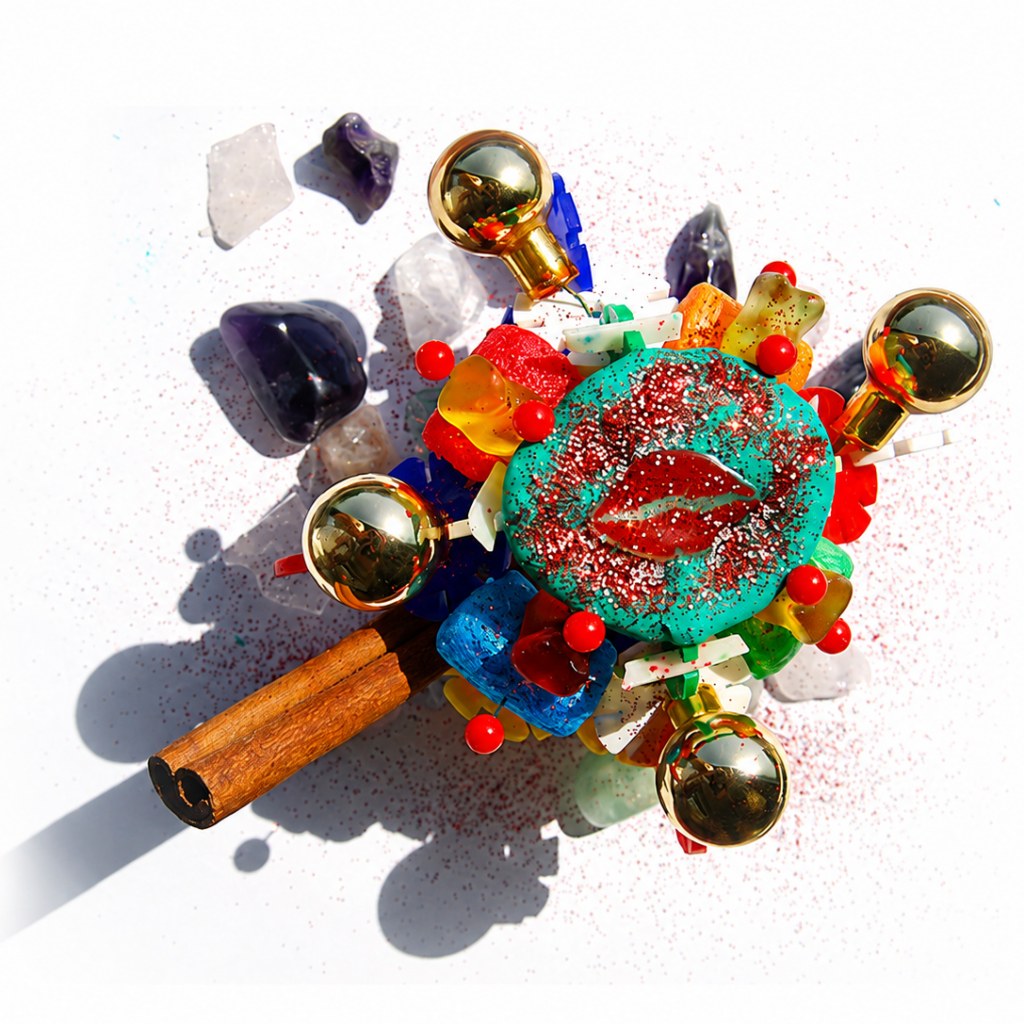
Multi-Sensory Sculpting® works with a toolkit consisting of a wide selection of abstract materials. The materials allow for the stimulation of the senses that were involved during the original brand experience and support the expression of multi-sensory knowledge that is difficult to verbalize. At the beginning of the data collection process, participants explore the available materials with all their senses. The goal is to stimulate participants multi-sensorily and thus prepare them for the actual construction task. Participants then build a sculpture that reflects the meaning of the examined brands for them. The resulting sculpture then serves as a stimulus for a projective individual interview, in which participants explain the meaning of individual materials as well as the meaning of the overall sculpture. The sculptures are photographed and the associated interviews are tape-recorded to enable a verbatim transcription.
Data analysis focuses on meanings expressed through the materials and through the verbal explanations. An aggregation of the data across all participants allows for a condensed representation of brand meanings, their connections, and the senses that were activated during the retrieval of individual brand meanings.
Multi-Sensory Sculpting® is applicable to brands from various industries and for different stakeholders. The method is used as a brand monitoring tool to gain insights into multi-sensory brand knowledge. This allows for a more multifaceted determination of which meanings and symbolisms of a brand are present in the memory of stakeholders. The results are also suitable as a starting point for creative professionals in designing brand touchpoints (e.g., product and store design, advertising motifs). Finally, brand strategy development offers another area of application for Multi-Sensory Sculpting®. With the help of the method, the brand meaning intended by management can be developed. The brand sculpture created during a strategy workshop serves as a strong multi-sensory symbol for the jointly developed results.
To date, Multi-Sensory Sculpting® has been applied to nearly 200 test subjects and over 7 brands from various industries (education, finance and healthcare, consumer goods industry, tourism, information technology) as well as for entire industries (beer, automotive) and concepts (Heimat). The results show that the task is easy for participants to understand and perform. Many participants particularly emphasized the playful character inherent in the MSS® method:
Sculpt your brand multi-sensorily!
If you also want to define the desired position of your brand or understand what multi-sensory meaning customers or employees attribute to your brand, please feel free to contact us.